How Bob Went From Door-Knocking to $120k MRR Using Targeted Cold Email
Bob had 4 clients after a year of manual outreach. Here's the ICP-first cold email approach that took him to $120k MRR.
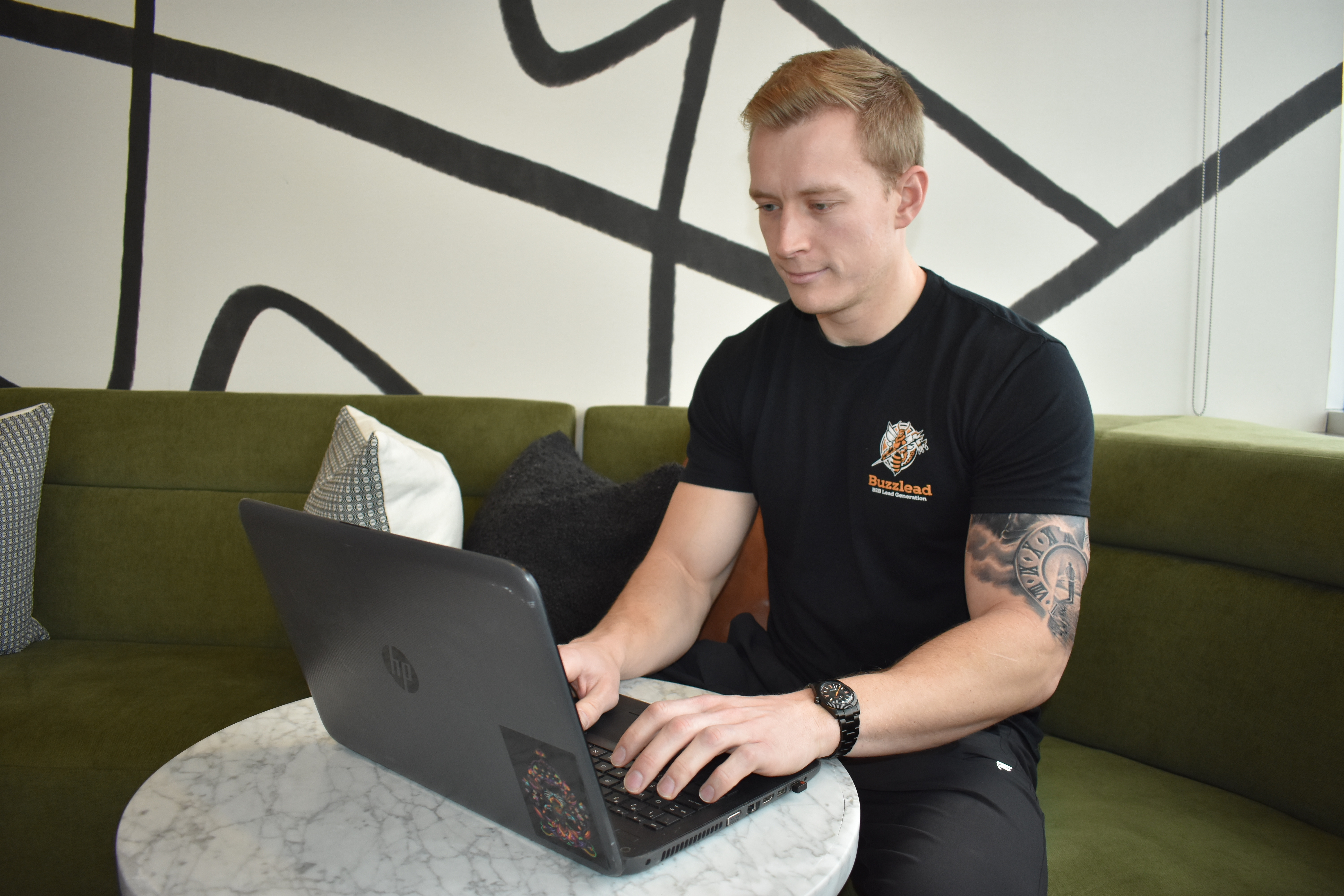
Bob and I actually met in a sauna. He had an HD acceleration program, a genuinely strong offer, and he'd been grinding for nearly a year trying to sell it. Door-knocking. Visiting salons, gyms, fitness centers. Pure B2C hustle. After all that, he had four clients and no real go-to-market strategy.
The offer wasn't the problem. The approach was.
Most B2B lead generation partners would have looked at that situation and seen a wide-open opportunity to flood a calendar with meetings. We didn't do that. We knew meeting volume wasn't the goal. Revenue was. That shift in focus changed everything about how we ran the campaign.
The Real Problem Wasn't Lead Volume
When someone has four clients after a year of outreach, the instinct is to say they need more activity. More calls, more doors knocked, more messages sent. That's usually wrong.
Bob's problem was that he had no clear ideal client profile and no repeatable channel. He was selling a high-ticket product ($3,000 to $4,000 a month) to whoever would listen. That's an exhausting way to grow a business, and it doesn't scale.
Before we sent a single email, we had to answer a more fundamental question: who actually has the pain this product solves, and who has the budget to pay for it?
Four Verticals, Not One Vague ICP
Bob came to us with three potential verticals in mind. Nick and I know the fitness and wellness space reasonably well, so we pushed back and came back with four verticals worth testing. We weren't guessing randomly. We were making informed bets based on where the pain points and the purchasing power were most likely to overlap.
This is where a lot of founders go wrong. They define their ICP once, loosely, and then blast the same message at everyone. We treated ICP development as an actual research process, not a checkbox. The verticals shaped the messaging, the targeting, and the qualification criteria.
Using Email Conversations as Discovery
Once we started outreach, we didn't just try to book calls. We used the email thread itself as an early discovery layer.
When someone responded, we'd engage them in a brief back-and-forth to see whether they were identifying with the pain points we were solving for other clients. This did two things. First, it filtered out people who were just curious but not actually experiencing the problem. Second, it gave us signal on which verticals were resonating and which weren't, so we could sharpen the targeting as we went.
Cold email isn't just a booking mechanism. Used well, it's a qualification tool.
📥 Email Send Calculator
Know exactly how many emails you need to book your pipeline goal.
Hard Qualification Before the Calendar Opens
Here's the part most people skip: before anyone could book a call with Bob, they had to confirm they were willing to invest $3,000 to $4,000 a month in the product.
That's a real ask. A lot of operators worry that adding a qualification question like that will kill response rates. It does reduce the number of people who book. That's the point. We weren't optimizing for call volume. We were optimizing for calls that could actually close.
When you're selling a high-ticket offer, one unqualified call costs you more than the meeting itself. It costs Bob prep time, follow-up time, and the mental overhead of chasing someone who was never going to buy. Putting a budget question on the booking page isn't aggressive. It's respectful of everyone's time.
Quality Over Volume, Every Time
The throughline in everything we did with Bob is that we never chased volume for its own sake. Four verticals tested systematically. Email conversations used to filter before the call. A hard budget qualifier on the booking page. Every layer of the process was designed to protect the quality of the pipeline, not inflate the size of it.
That's how you get from four clients to $120k MRR without burning out your sales process or your client.
If Bob had just started blasting thousands of contacts with a generic pitch, he might have booked more calls in the short term. He also would have wasted most of them, confused his positioning further, and probably still be stuck trying to figure out which vertical actually wanted what he was selling.
The better path is slower to set up and faster to compound.
Key Takeaways
Meeting volume is not the goal. Revenue is. Design your campaign around that distinction from day one.
ICP development is a research process, not a one-time guess. Test multiple verticals with real outreach before committing to one.
Use email conversations as a discovery layer, not just a booking trigger. Engagement quality tells you whether your targeting is right.
For high-ticket offers, put a budget qualifier on the booking page. Fewer calls, better calls.
One year of manual B2C hustle got Bob four clients. A focused B2B cold email system with hard qualification got him to $120k MRR.
Frequently Asked Questions
Why didn't you just focus on booking as many calls as possible for Bob? Because call volume and revenue aren't the same thing. Bob was selling a $3,000 to $4,000 per month product. One bad-fit call wastes more than just the meeting slot. We built the campaign around qualified pipeline, not raw activity numbers.
How did you decide which verticals to test? Bob came in with three ideas. We added a fourth based on our own knowledge of the fitness and wellness space. The goal was to make informed bets on where the pain points and purchasing power were most likely to align, then let real outreach data tell us which ones were actually resonating.
What was the purpose of asking budget questions before someone could book a call? It protected everyone's time. If a prospect isn't willing to invest at the price point the offer requires, the call has no real path to a close. Adding that qualifier to the booking step filtered for seriousness without making the sales conversation itself feel like an interrogation.
How did you use the email thread itself as a qualification tool? When prospects responded, we'd have a brief back-and-forth to see whether they were experiencing the specific pain points the product addresses. If they weren't identifying with those problems, they weren't a fit, and we'd know that before putting them on Bob's calendar.

This is one piece. The full system is the 2-hour masterclass.
Drop your email and get the full 15-chapter system — offer, list, copy, sequences, deliverability — start to finish.
More on strategy.


Referrals, replaced.
20-minute strategy call. We'll audit your ICP, show you which signals we'd track, and map out exactly what the first 120 days would look like. No commitment, no pressure, no pitch deck.
